Did you know that indoor air can be two to five times more polluted than outdoor air, even in heavily industrialized areas? This surprising reality often stems from the very air that infiltrates our homes, bringing with it microscopic particles that accumulate within our ventilation systems.
When we examine environments like Houston, a major hub for port activity and petrochemical industries, we gain critical insight into how external industrial emissions directly impact the air circulating inside our residences. While Los Angeles residents face different primary external threats, the principles of infiltration and the crucial role of air duct cleaning remain universally applicable.
Houston’s Industrial Air Quality: A Case Study
Houston’s unique geography and economic drivers create a distinct atmospheric challenge. The city is home to the Port of Houston, one of the busiest in the world, and a vast petrochemical complex, including numerous refineries and chemical plants. These operations are significant contributors to ambient air pollution, releasing a cocktail of contaminants.
Fine Particulate Matter (PM2.5) and Its Sources
One of the most concerning pollutants is fine particulate matter, specifically PM2.5 – particles 2.5 micrometers in diameter or smaller. To put that in perspective, a single human hair is about 70 micrometers thick. These tiny particles are easily inhaled deeply into the lungs and can even enter the bloodstream. In Houston, PM2.5 originates from various sources:
- Port Activity: Exhaust from massive container ships, tugboats, drayage trucks, and heavy machinery used for cargo handling. Burning bunker fuel, a heavy oil, releases soot, sulfur oxides, and fine metals.
- Petrochemicals: Emissions from industrial processes, flaring, and fugitive leaks at refineries and chemical plants introduce volatile organic compounds (VOCs), nitrogen oxides, and other hazardous air pollutants that can form secondary particulates.
- Traffic Emissions: While pervasive in all cities, the heavy industrial vehicle traffic surrounding these facilities compounds the problem.
The consistent release of these ultrafine particles into Houston’s atmosphere means they are an ever-present component of the outdoor air. DD Air Duct Cleaning understands that these external factors demand a robust indoor air quality strategy, a need mirrored in other bustling urban centers such as those served by DD Air Duct Cleaning in Houston.
The Path of Infiltration: From Outdoor Air to Indoor Air Ducts
Many homeowners mistakenly believe their sealed windows and doors offer complete protection from outdoor air pollution. In reality, modern homes are not airtight. Fine particulate matter infiltrates through:
- Microscopic Cracks and Gaps: Even seemingly sealed structures have tiny openings around windows, doors, and utility penetrations.
- Natural Ventilation: Opening windows or doors for fresh air directly introduces these particles.
- HVAC Systems: While HVAC filters are designed to capture particles, standard residential filters (MERV 8-10) are not 100% effective against ultrafine PM2.5. Over time, particles bypass or slip through these filters, especially if they are dirty or improperly fitted.
Once inside your home, these particles don’t simply settle and disappear. They become airborne again with daily activities, and a significant portion is drawn into your HVAC system, circulating through your air ducts. Your ductwork effectively becomes a repository for these industrial pollutants, alongside dust, pet dander, and other indoor allergens. For homes in a similarly industrialized area, consider the proactive measures taken by DD Air Duct Cleaning in Dallas.
A Tale of Two Cities: Los Angeles vs. Houston
While Houston contends with specific industrial sources, Los Angeles faces its own complex air quality challenges that similarly impact indoor environments. Compare:
- Houston’s Petrochemicals & Port: Constant emissions of industrial VOCs, heavy metals, and combustion byproducts from refineries and shipping.
- Los Angeles’ Traffic & Wildfires: Heavy vehicular traffic on freeways like the 405 and 101 generates substantial PM2.5 and nitrogen oxides. Additionally, annual wildfire seasons, a frequent concern for residents from Ventura to Orange County, blanket vast areas with fine smoke particles that readily infiltrate homes. The Port of Los Angeles and Long Beach also contribute significantly to localized air pollution.
In both scenarios, whether industrial emissions or wildfire smoke, the outcome for your home’s internal systems is similar: an accumulation of fine particulate matter within your air ducts. This buildup isn’t benign; it creates a reservoir of pollutants that your HVAC system then redistributes throughout your living spaces every time it runs. This necessitates regular professional intervention, just as seen with DD Air Duct Cleaning in Denver, another city with unique environmental air quality factors.
The Silent Threat in Your Ductwork
Think of your air ducts not just as pathways for conditioned air, but as the lungs of your home. When these “lungs” are congested with layers of dust, industrial fallout, pollen, pet dander, and other contaminants, their efficiency drops, and more importantly, they become a source of indoor air pollution.
Scientific studies confirm a direct link between indoor particulate levels and respiratory health issues. For Los Angeles residents, proactive maintenance is key to mitigating these risks. Regular cleaning prevents the recirculation of pollutants, ensuring cleaner, healthier air for you and your family. For instance, considering a comprehensive residential air duct cleaning can significantly improve your home’s air quality.
How DD Air Duct Cleaning Addresses the Problem in Los Angeles
At DD Air Duct Cleaning, we understand the specific environmental challenges faced by Los Angeles residents. Our specialized air duct cleaning services are designed to remove the accumulated layers of dust, debris, and fine particulate matter that infiltrate your home, regardless of their original source – be it traffic exhaust, wildfire smoke, or the distant echo of industrial emissions.
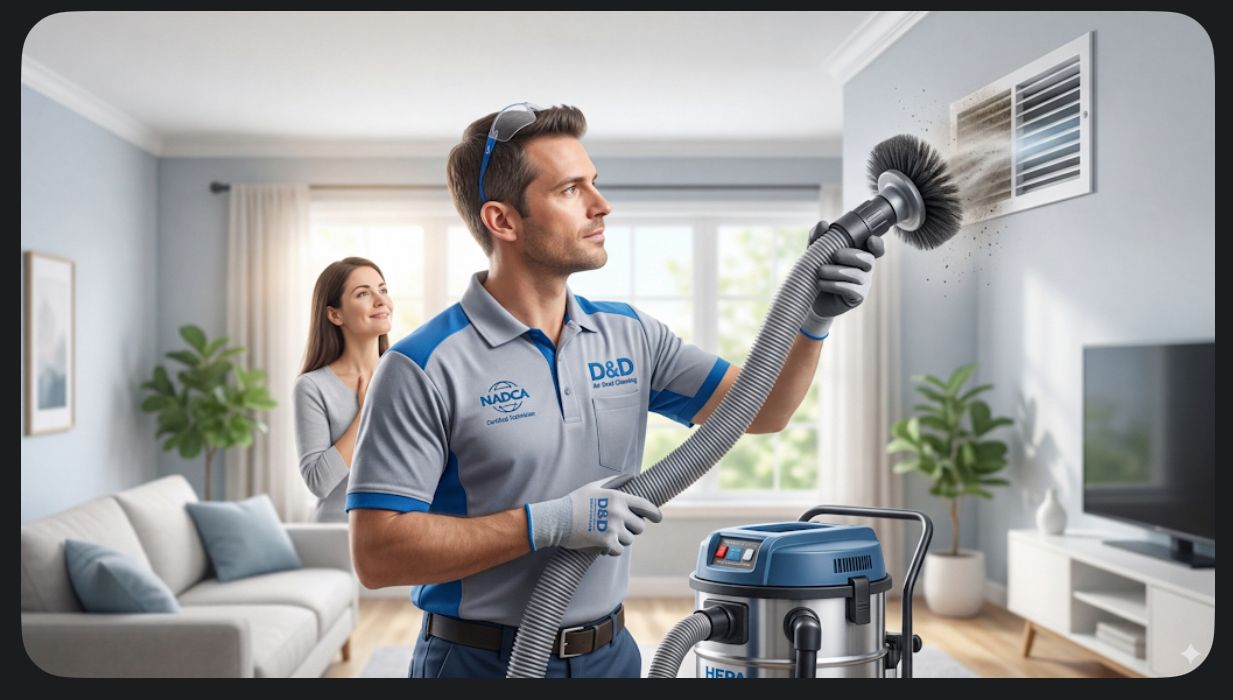
Our process uses powerful, industry-grade vacuum systems and specialized tools to meticulously clean the entire ductwork system, from the main trunks to individual branch lines. This thorough approach ensures that the contaminants are not merely disturbed but completely extracted from your home’s ventilation infrastructure, unlike what superficial cleaning methods achieve. Investing in professional air duct cleaning benefits your family’s health and your HVAC system’s efficiency. Speaking of home maintenance, BH Locksmith provides top-quality locksmith.
Frequently Asked Questions
Here are common questions regarding air duct cleaning and indoor air quality:
Q1: How often should air ducts be cleaned in an urban environment like Los Angeles?
A1: We generally recommend professional cleaning every 3-5 years. However, in areas with high traffic pollution, wildfire exposure, or if you have pets or allergy sufferers, more frequent cleaning (every 2-3 years) may be beneficial.
Q2: Can air duct cleaning help with allergies or asthma?
A2: Yes. By removing allergens such as dust mites, pollen, pet dander, and mold spores trapped within your ducts, air duct cleaning can significantly reduce triggers for allergy and asthma symptoms. We recommend checking out best garage door in Sacramento County for additional garage door needs.
Q3: What types of contaminants does air duct cleaning remove?
A3: Professional air duct cleaning removes dust, dirt, debris, pet dander, pollen, mold spores, rodent droppings, insect infestations, and fine particulate matter from both indoor and outdoor sources.
Q4: Is the process messy?
A4: No. DD Air Duct Cleaning utilizes powerful, truck-mounted vacuum systems with high-efficiency particulate air (HEPA) filtration that create negative pressure within your ductwork, preventing contaminants from spreading into your home during the cleaning process.
Q5: What’s the difference between a standard HVAC filter change and air duct cleaning?
A5: Changing your HVAC filter prevents *new* contaminants from entering your system. Air duct cleaning removes the *accumulated contaminants* that have already bypassed filters and settled within the ductwork over time. Both are essential for optimal indoor air quality.
Q6: How does outdoor pollution from wildfires or traffic affect my indoor air ducts?
A6: Fine particulate matter from wildfires and vehicle exhaust is small enough to bypass most standard filters and infiltrate your home through various openings. Once inside, these particles are drawn into your HVAC system, settling within your air ducts and contributing to a buildup that compromises indoor air quality. This is why our services for air duct cleaning in Los Angeles are so crucial.
Take Control of Your Indoor Air Quality Today
Don’t let the unseen burden of external pollutants compromise your home’s air. DD Air Duct